New Tax Exemptions Signed into Law
New changes were made to Wisconsin’s tax code as various bills were signed into law. AB 676 reduces taxes for investors who provide financing to small businesses in impoverished and underserved communities. This will stimulate private investment throughout the state, targeting small businesses that represent the bulk of employers in Wisconsin. Ultimately, this new law expands economic opportunity in communities that need it most.
Senate Bill 376 updated Wisconsin’s tax credit for employer-provided childcare to match the new federal initiative. This nonrefundable credit is now equal to 40% of the costs of establishing and operating a childcare facility for the benefit of employees. This expansion can alleviate the financial burden of childcare and potentially enhance access by incentivizing employers to offer the benefit.
AB 657 creates a sales and use tax exemption for qualified nuclear fusion projects, further helping position Wisconsin at the forefront of emerging energy technologies and driving innovation. This initiative continues the promotion of nuclear energy in Wisconsin, building on the numerous laws passed this session. I’m glad we’ve continually been able to find common ground to make our state a leader in this next-generation technology.
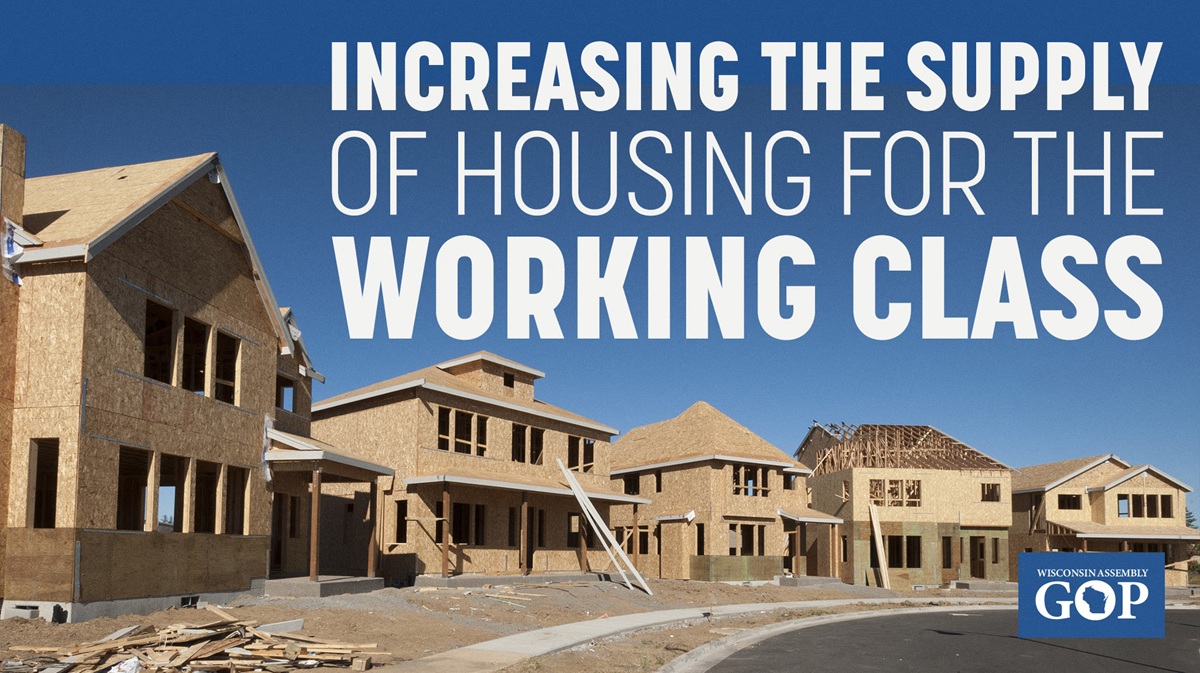
AB 182 adopts tax reductions offered to developers by requiring 35% of the credits be administered for projects in rural areas. Under the new law, rural areas include communities with populations less than 10,000 that are at least 10 miles from any municipality with a population of 50,000 or more. This will continue to free up capital for developers while incentivizing an increase in housing supply in areas of need.
Further Tax Relief Vetoed
Not every opportunity for tax relief was taken, as the governor vetoed multiple proposals. AB 38 created an income tax exemption on earnings from tips. Under the proposal, workers in qualifying tipped occupations could deduct up to $25,000 in tips from taxable income each year, phasing out for high earners and self-employed individuals. Despite verbally supporting this policy and including a similar proposal in his own budget, the governor experienced a rapid change of heart and killed this substantial relief for the service industry.
AB 461 created an income tax exemption on overtime wages. This subtraction applied to documented overtime pay shown on a worker’s standard wage statement. Single filers were able to subtract up to $12,500 of overtime earnings each year from their state taxable income, and married couples filing jointly were able to subtract $25,000 under the bill. This alignment with the federal tax code provided direct and tangible relief for some of the hardest-working among us, but unfortunately, it will not become law.
AB 208 created a tax exemption for government-issued broadband grants. The exemption allowed broadband developers to access the entirety of their federal grants, enabling access to an estimated $70 million in additional federal funding. Broadband connection is critical for economic development and modernization in today’s environment. With this veto, the state will unnecessarily continue to reduce this crucial federal funding.
SB 389 repealed Governor Evers’ 400-year veto that enabled property tax increases in perpetuity. This regressive policy will now remain state law into the future, irresponsibly strangling state budgets without legislative consent. Future conversations around K-12 funding must consider updated budget outlooks, enrollment data, and other unknown factors. Instead, these decisions will be forcibly tied to billions in taxing authority created by a single governor’s abuse of a temporary measure.
Wisconsin Conservation Congress Spring Hearings
The Wisconsin Department of Natural Resources (DNR) and Conservation Congress (WCC) are holding their Spring Public Hearings on Monday, April 13th. I encourage everyone interested to attend and share their thoughts on various natural resource proposals. An online opportunity for public input will also be available from 6 P.M. April 13th through 6 P.M. April 15th here: https://dnr.wisconsin.
DNR staff and WCC delegates attend these hearings to discuss local issues and open a dialogue between the public, the DNR, and the WCC about areas of interest and concern. County hearings for constituents of the 4th Assembly District have the following details:
Brown County:
- Monday, April 13th from 6:00 P.M. – 9:00 P.M.
- Northeast Wisconsin Technical College – 2740 W Mason Street, Green Bay Room SC130
Oconto County:
- Monday, April 13th from 6:00 P.M. – 9:00 P.M.
- Suring High School – 411 East Algoma Street, Suring (Cafeteria)
Follow Along on Facebook
Want to hear more about what’s going on in Madison and the district? Follow my Facebook page for weekly updates and to learn more about bills, events, and efforts I’m involved in. Find my Facebook page here: facebook.com/RepSteffen/.
Contact Me
My office is always available to help with any state-related questions or concerns you may have. You can reach my office at (608) 237-9104, or email me at Rep.Steffen@legis.wisconsin.